Interview Ondrej und Frederik
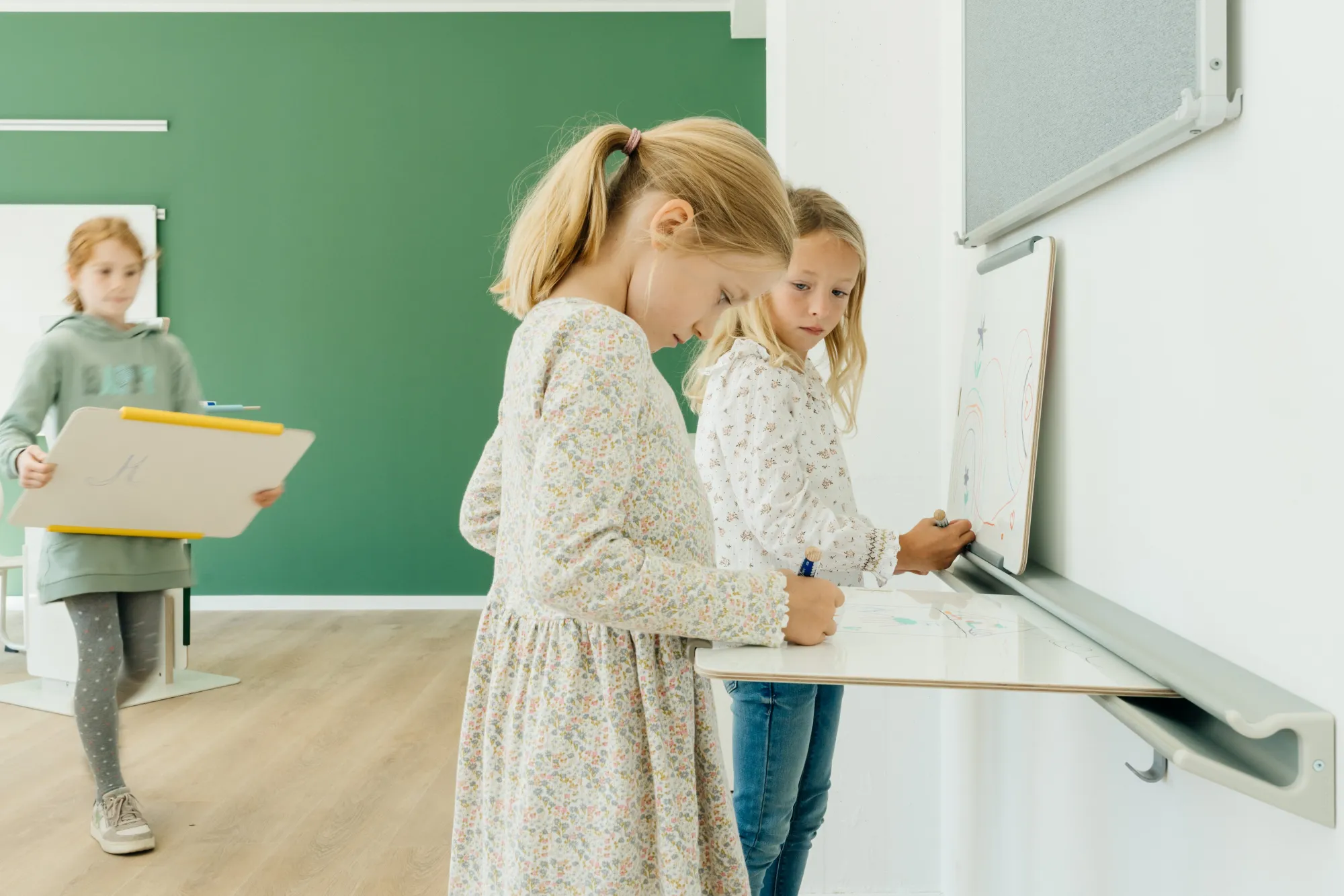
Freedom needs guidance
Frederik Flötotto and Ondřej Píhrt in conversation about graduation, independent learning and the question of how freedom gives rise to responsibility.
When people talk about modern schools, terms such as ‘independent learning’ and ‘freedom to choose where to learn’ often come up. To some, this sounds promising; to others, it suggests a lack of structure. What does this freedom mean in everyday school life? How is the quality of learning ensured? And how can a graduation system contribute to this?
A conversation between Frederik Flötotto, entrepreneur and founder of the Energiebündel Schule, and Ondřej Píhrt, architect at SOA architekti in Prague and co-founder of the SchoolLAB platform.
Frederik Flötotto: Ondřej, whenever I hear people discussing new school concepts, I keep coming across this phrase: ‘Children can learn whenever and wherever they want.’ I can understand why parents might be sceptical about this. The phrase actually leaves out everything that makes this freedom possible in the first place.
Ondřej Píhrt: Yes, it describes a possibility, but not yet an educational concept. What are the objectives? How is the day structured? When do they all learn together? Who supports a child when they get stuck? Without this information, it’s easy to get the wrong impression.
Frederik: At our Energiebündel School, we combine independent learning with very close support for the children. Our learning mentors provide guidance, explain the content and help the children organise their work. This includes regular, individual coaching sessions every two weeks. So such a session does not necessarily take place every week. However, day-to-day support goes far beyond these sessions: the children can ask questions, receive feedback and get help whenever they need it. They take responsibility for decisions they are already capable of making and practise the next steps. This independence is itself a learning objective.
Ondřej: This is also a crucial starting point when planning a school. We need to understand how this support works in everyday life, or how it should work in future. The educational concept, organisation and premises should therefore be developed jointly and coordinated with one another.
Frederik: A term that frequently comes up in this context is ‘graduation’. To many people, this initially sounds like a school-leaving qualification. What is meant by this here?
Ondřej: It refers to steps on the path towards greater independence and responsibility. Some schools describe these using specific levels. These are intended to help the child and the supporting adults agree on the next steps and the current need for support. The specific structure varies from school to school. Graduation is one possible tool; independent learning does not necessarily require a system of fixed levels.
Do you use such levels at your school, or do you organise the progression towards greater independence in a different way? What specific decisions can the children take on themselves, and how are these arrangements reviewed?
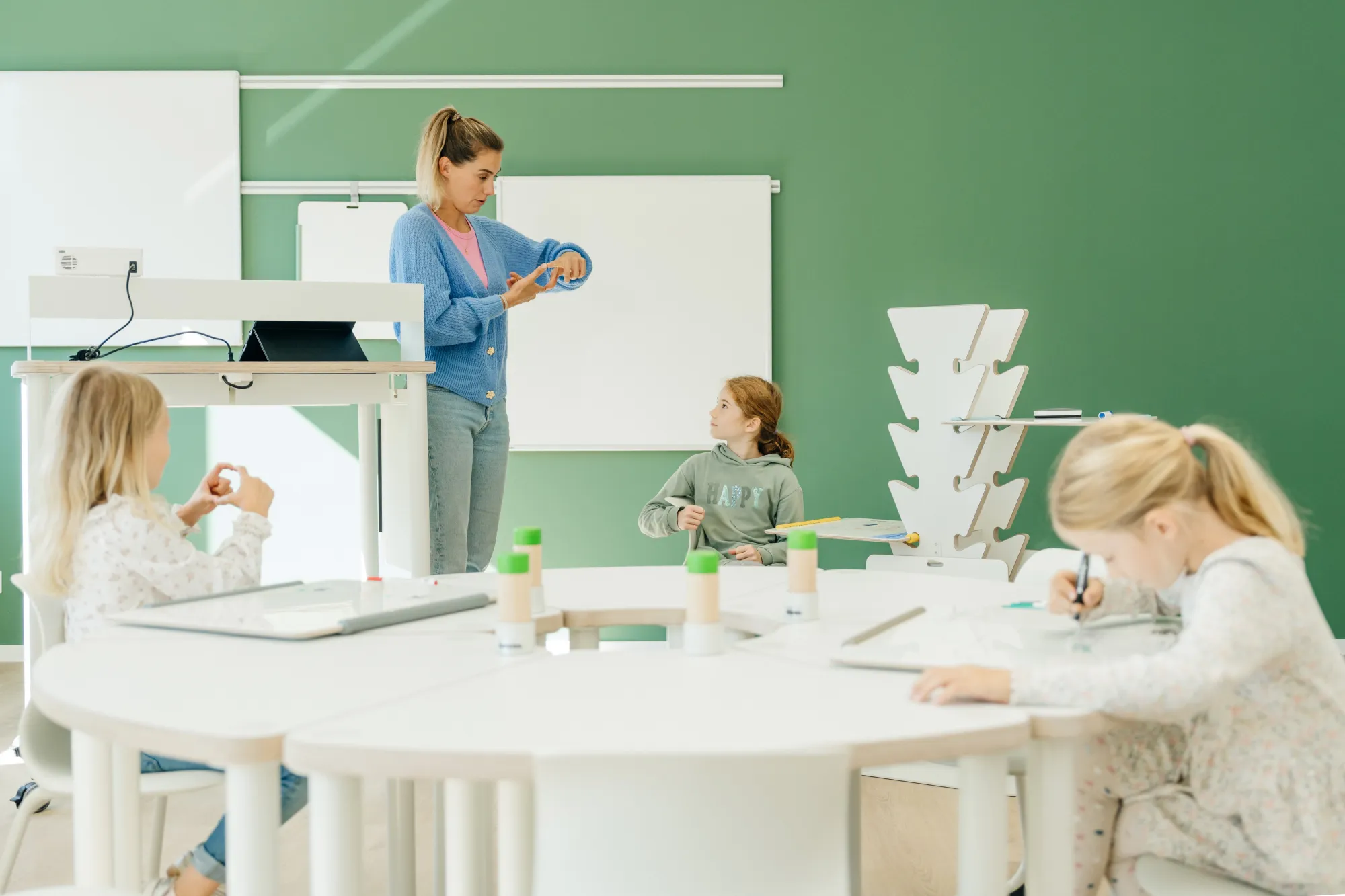
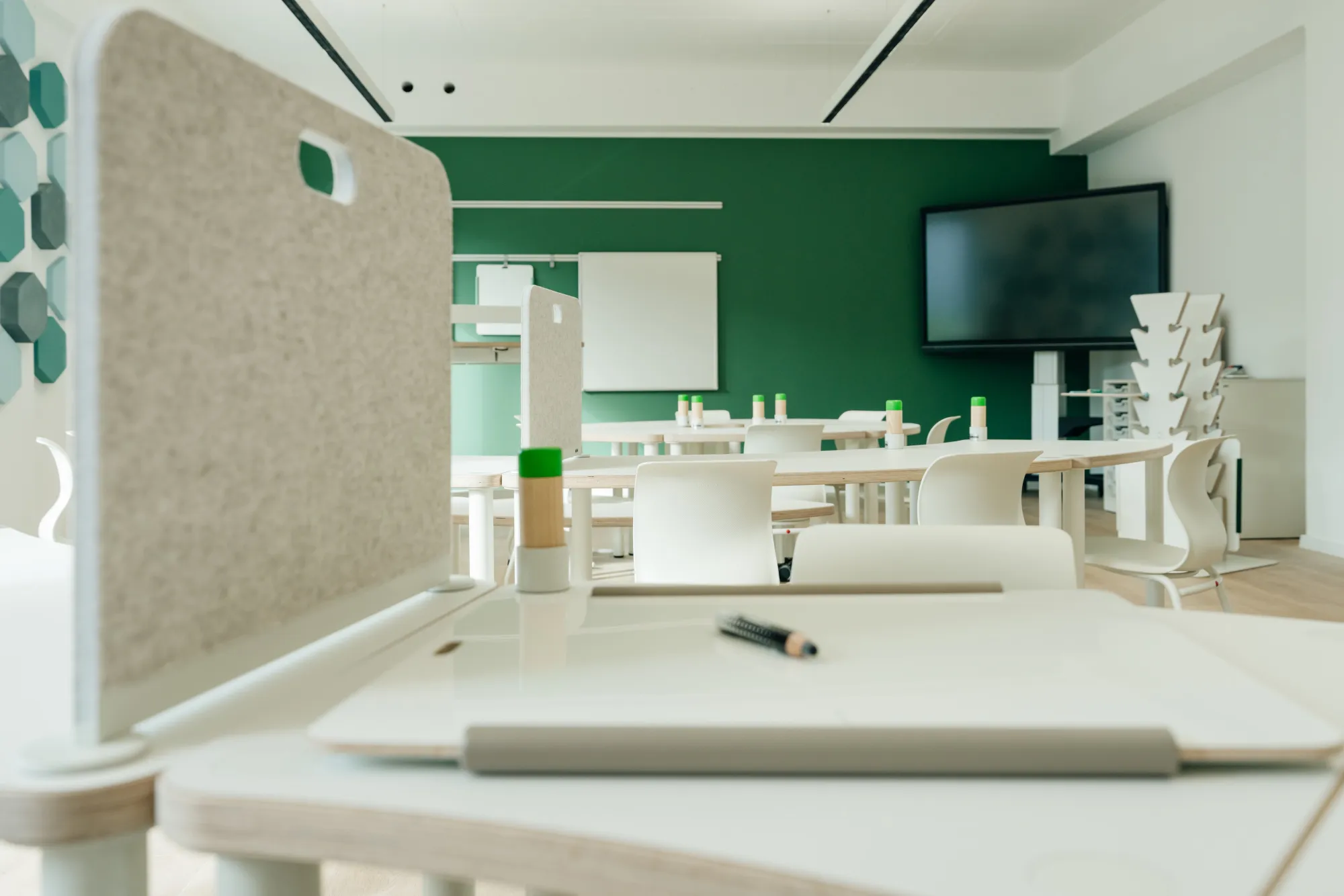
Frederik: At our school, the focus is on providing close support for each individual child. When we talk about progression, for me it’s about what responsibility a child is already able to take on and where they still need support. This relates to very specific decisions: How do I start a tas ? Which learning space helps me with this? When do I need help? The regular coaching sessions every two weeks provide an opportunity to look at such questions together, discuss experiences and agree on the next steps. In between these sessions, our learning mentors stay closely involved with the children. Naturally, we do not wait until the next coaching session to provide feedback or offer any necessary support.
Frederik adds: “For me, the concept only becomes clear through specific questions: Can a child start their work? Can they assess what materials they need? Do they recognise when they haven’t understood something yet? Do they seek support? Those who learn this develop skills that go far beyond individual school assignments.”
Ondřej: And these skills cannot simply be taken for granted. Children need opportunities to try them out, and adults who talk to them about them. In the two primary schools in Hamburg that we recently visited, preparation for a so-called ‘pass system’ begins as early as Year 1. From Year 2 through to Year 4, the children work with it; as they get older and gain more experience, their options expand. Independence develops over several years, through practice and guidance.
At the schools we visited, close collaboration between teaching staff was also crucial to this. The timetable provides the framework. The teaching teams plan the specific content and structure of the learning activities together each week – for a particular year group, for example – and adapt them to the current situation. On top of this, there is daily coordination. At the school on Bahrenfelder Straße, teachers and educational support staff from the all-day programme work as a single team. How do you organise this joint planning at your school? And how do you agree on what support a child currently needs?
Frederik: For me, the key thing is that we develop a shared understanding of each individual child within the team. Observations from day-to-day learning and discussions with the child must be brought together: What are they already managing to do? Where are they struggling? What support actually helps them? The fortnightly coaching sessions serve as a reliable anchor for this. However, they are no substitute for paying attention in everyday life or for coordination amongst the adults. And when assessments differ, we should look closely at the specific situations in which something is working and those in which it isn’t yet. A child cannot be described by a single judgement.
Frederik adds: Nevertheless, a tiered system can quickly come across as a reward scheme: ‘If you behave well, you’re allowed to work outside the classroom.’ Where do you draw the line?
Ondřej: It becomes problematic when freedoms are exchanged primarily for conformist behaviour. Then a child may be more concerned with how to obtain a privilege than with how to organise their learning in a meaningful way.
Frederik: That is precisely why we, as adults, must question our criteria. A quiet child does not automatically work independently. And a child who asks a lot of questions is not automatically dependent. A specific question can show that someone is very consciously engaged with their learning process.
Ondřej: This also has spatial implications. A sheltered study area must not become a reward for particularly well-behaved children. It is precisely a child who is easily distracted who might need this space.
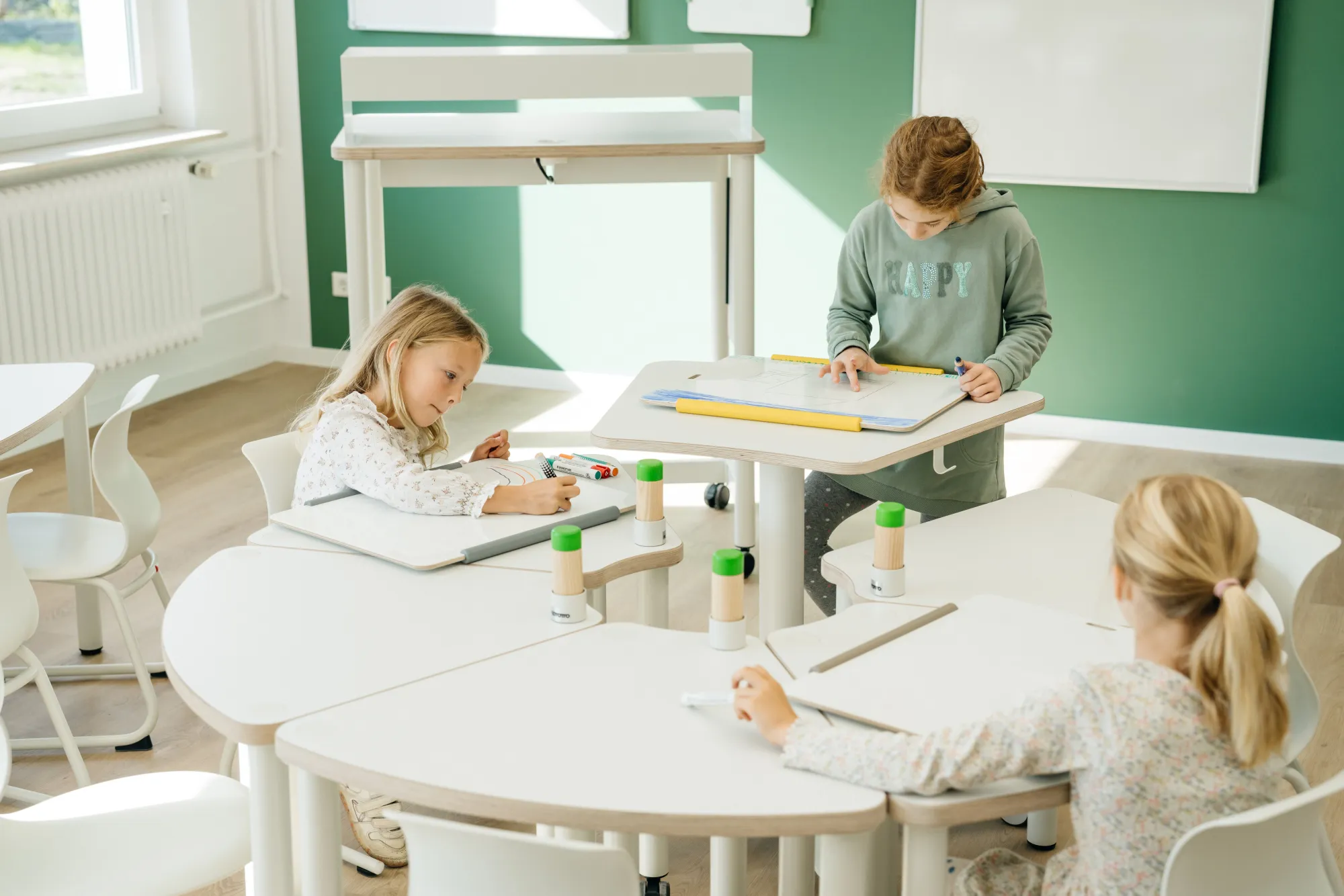
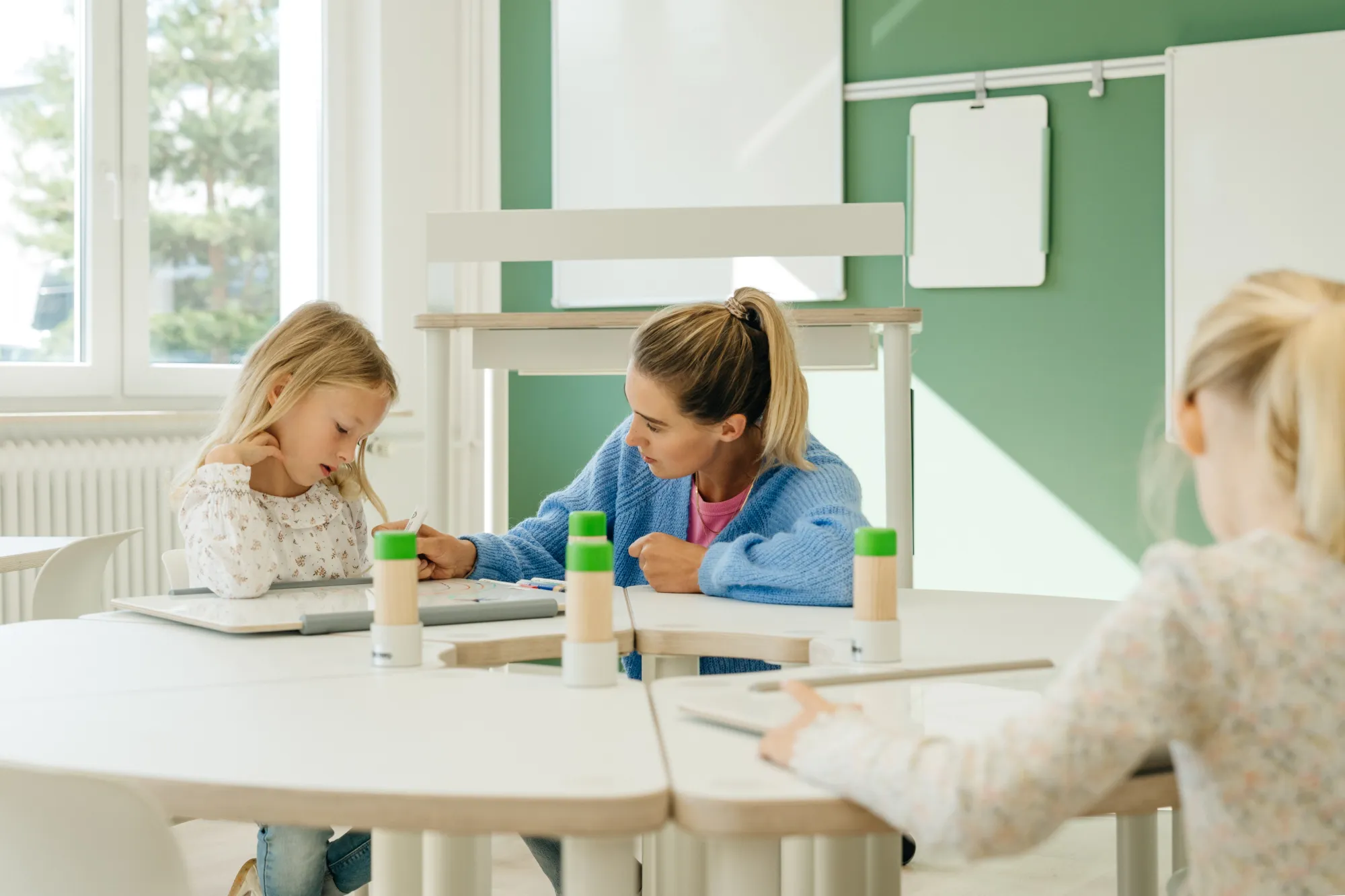
Frederik: At our school, the learning mentors therefore look at what kind of environment and what kind of support helps a child to learn. We talk to the children about their choices. A learning space must be suited to the task at hand and the child’s current needs. Its use should be pedagogically justified.
Ondřej: At the same time, there need to be rules for shared use. Anyone working in a quiet spot must be able to respect the concentration of others. This also involves practising this behaviour together.
Frederik: Let’s take a typical situation: two children want to work together in a different spot. After a while, they’ve barely made a start. Some would say: ‘That just goes to show that freedom doesn’t work.’
Ondřej: First of all, it shows that we need to take a closer look. Have the children understood the task? Do they know how to get started? Is working together actually helping at the moment? Perhaps a brief explanation is needed, or perhaps the chosen location wasn’t suitable.
Frederik: That’s exactly how our learning mentors proceed. They discuss with the children what the problem is and agree on the next step. This might mean: we start together, break the task down into smaller sections, or agree on a brief check-in. We then see if things go better. The key thing is that the child understands what helps them. Simply changing their workspace without discussing the cause won’t lead to any progress in learning.
Ondřej: And such an arrangement can be adjusted again. Support must be able to respond to the current situation. But what happens if it isn’t enough at first and a child repeatedly disrupts others’ work? Who then decides on a temporary restriction, how is the child involved in the decision, and how can they gradually regain more independence?
Frederik: For me, it starts with clarifying the situation with the child whilst ensuring that the others can carry on working. If a child is still overwhelmed by a situation, they first need more closeness and support. Temporarily providing closer support should help them get back into learning. We need to explain what is proving difficult at the moment and what the next achievable step might be. It is essential to take the child’s perspective into account. Such an arrangement must be reviewed promptly. The fortnightly coaching sessions provide a fixed framework for this; if it becomes apparent beforehand that something needs adjusting, that mustn’t be put off, of course. The aim remains for the child to be able to take on more responsibility again.
Frederik adds: What would you say if the parents asked: ‘With all these meetings, is my child actually learning enough maths, reading and writing?’
Ondřej: Every school must be able to provide a specific answer to this question. It must demonstrate what academic objectives are being pursued, how a child’s progress is assessed, and what happens if a child needs additional support.
Frederik: For us, these things go hand in hand. Our learning mentors focus on understanding: Can a child explain something? Follow a line of reasoning? Apply what they’ve learnt to a different task? Simply completing a worksheet doesn’t in itself answer these questions. Independent learning therefore also involves explanations, practising together and targeted guidance. Children don’t have to figure everything out for themselves. As adults, we bear the responsibility for ensuring they make academic progress.
Ondřej: To achieve this, the school needs a variety of settings: a space for a group introduction, a suitable workspace for practising, and opportunities to clarify questions in a small group.
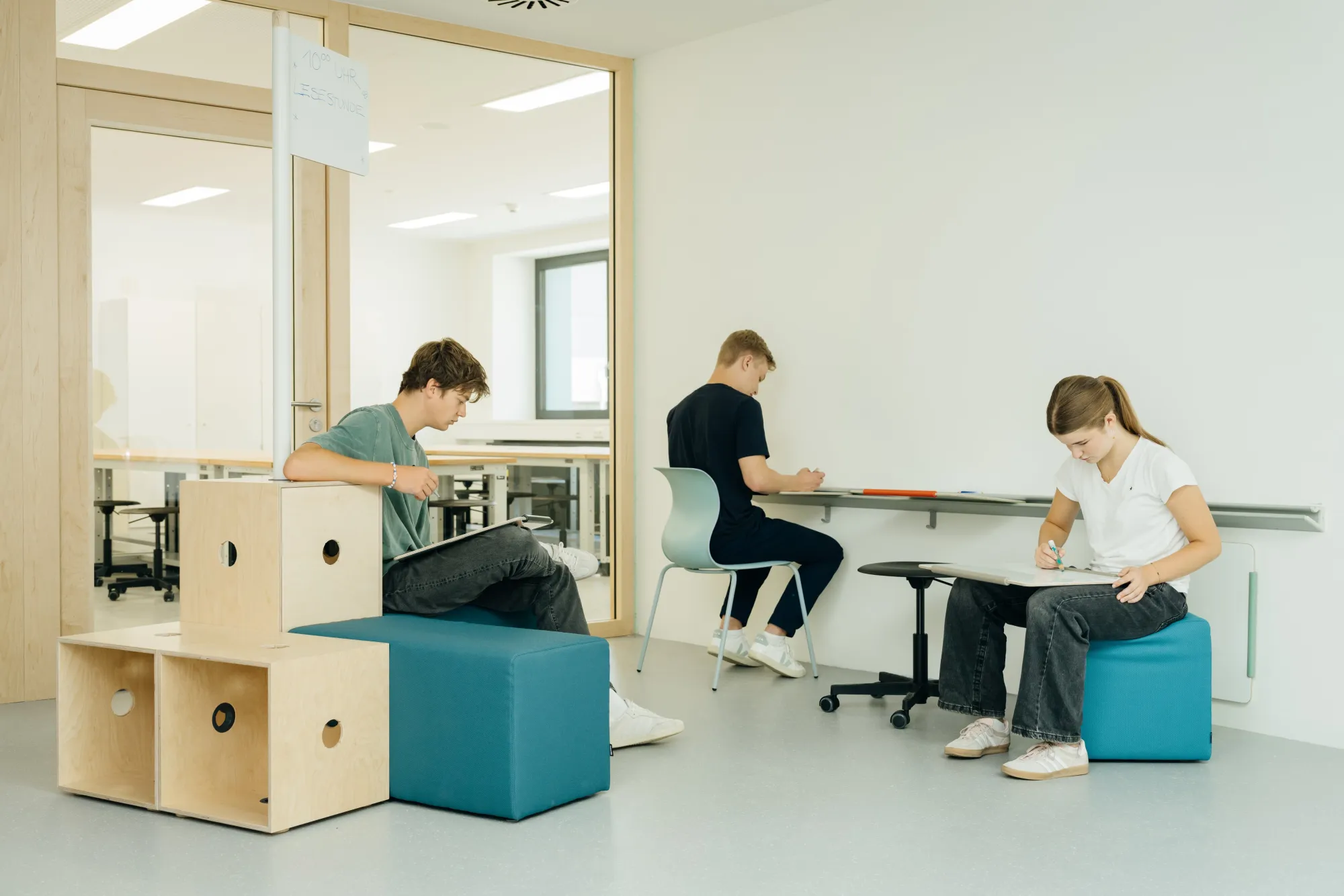
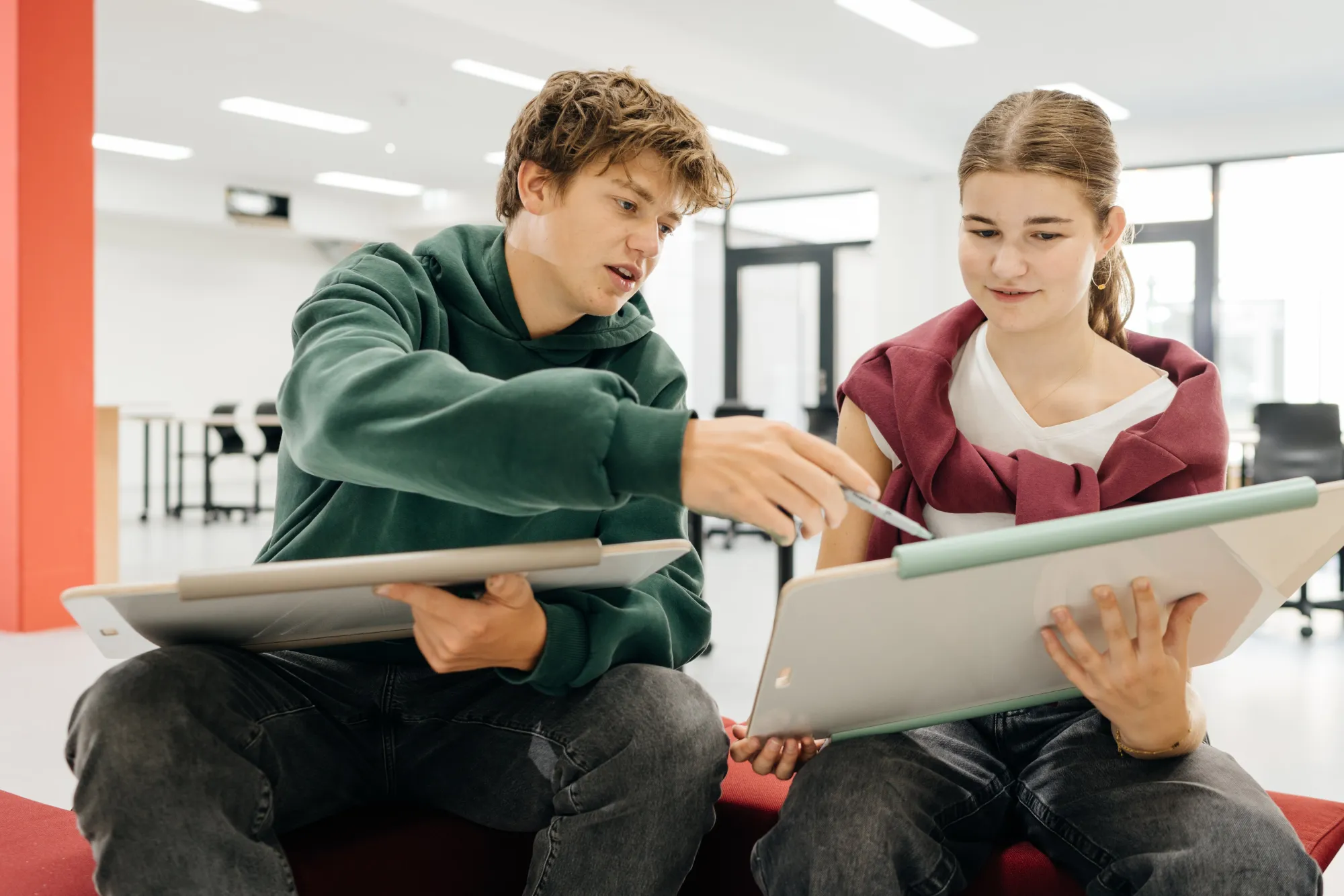
Frederik: We should also distinguish between academic performance and self-organisation. A child may be very good at maths but still struggle to plan their work.
Ondřej: Whilst another child may need more academic support but already organises their work very thoughtfully. A grading system should take these differences into account. A single grade can only describe a child to a limited extent anyway.
Frederik: That’s why I think it’s dangerous if this leads to a hierarchy. Children develop differently and need varying levels of support depending on the task. Anyone seeking closeness to an adult shouldn’t have to justify it. At our school, recognising and expressing one’s own need for support is part of the learning process. That, too, is a form of responsibility.
Ondřej: And adults should be mindful of how children experience the levels. A mother from one of the schools we visited in Hamburg described both sides to us: her daughter saw the so-called ‘pass’ as a sign of trust and was able to work well with her friends. However, she also told us about two children she knew who were disappointed because different levels limited their opportunities to work together. Another mother perceived the visible labelling as a public assessment. These are individual experiences, not a general assessment of the system. However, they highlight the questions we need to ask: Who sees the classification? What does it mean for friendships? And how do children experience a restriction on the opportunities they previously had?
Frederik: Let’s move on to the architecture. In your view, does independent learning require, above all, open-plan spaces?
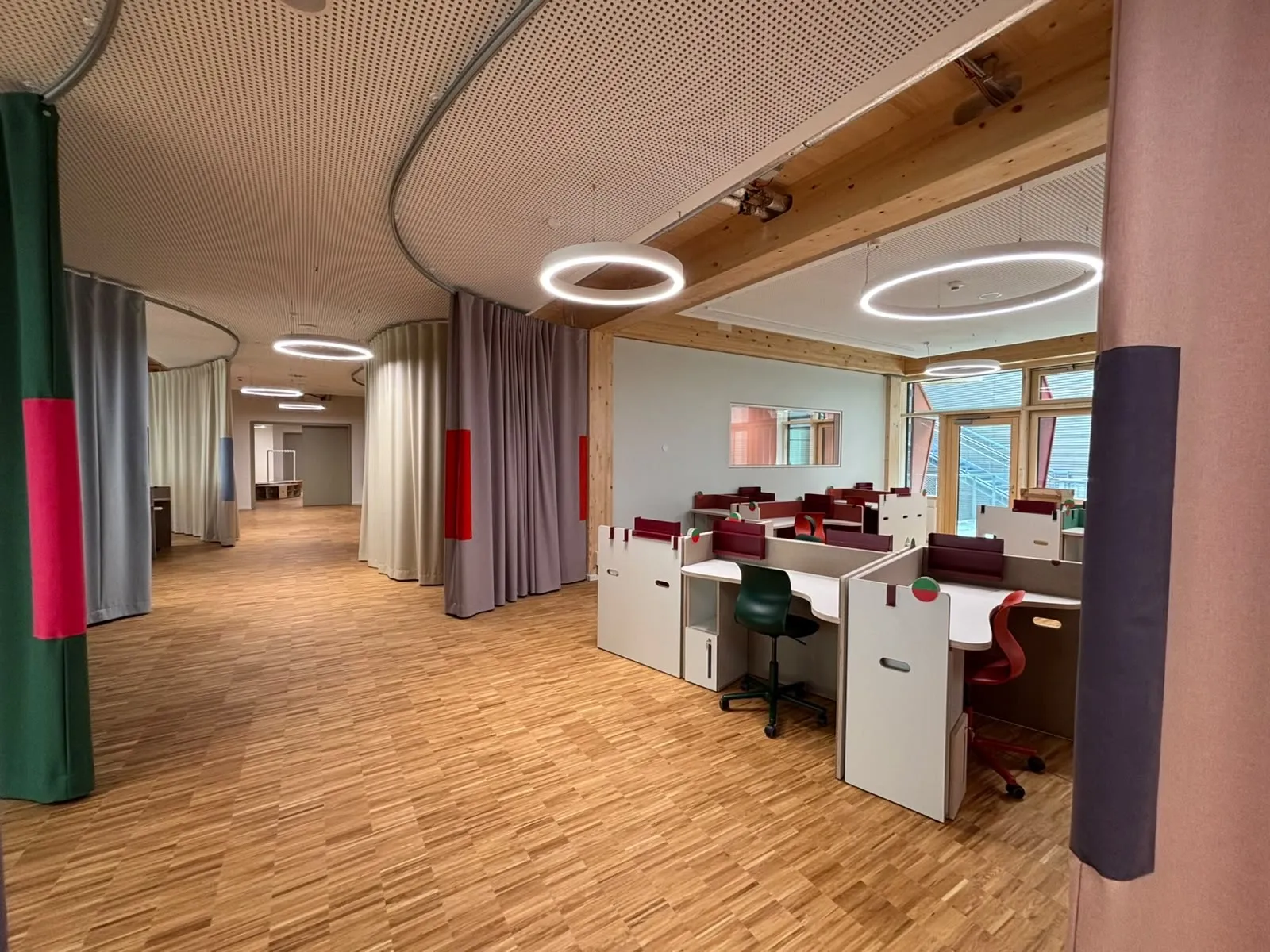
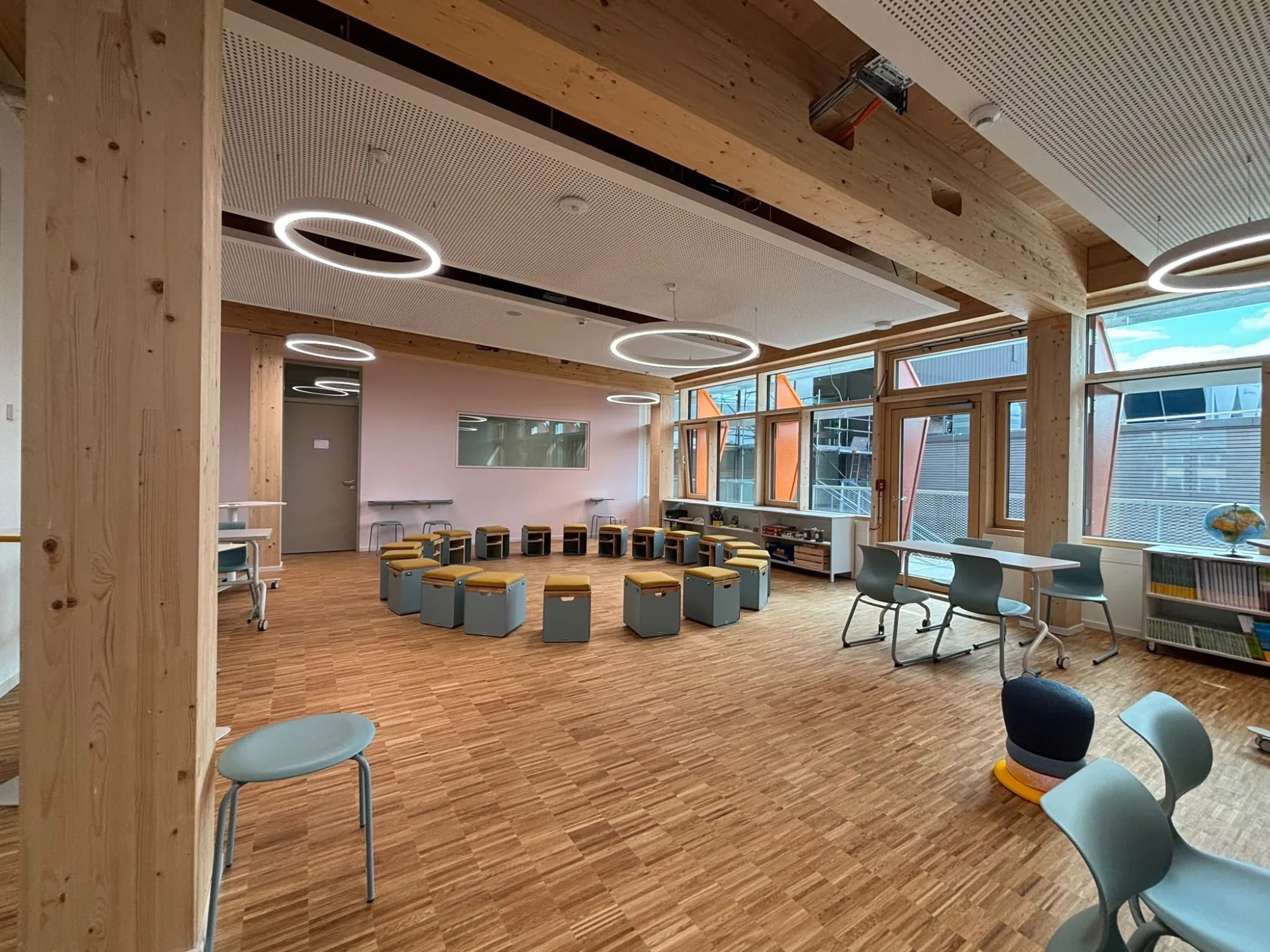
Ondřej: It requires spatial diversity. Openness can facilitate interaction, but it can also cause distraction. Having a quiet space can aid concentration, but must not result in a child being cut off from support. Acoustics, lighting, wayfinding and the accessibility of learning support staff are therefore key planning considerations. The two schools in Hamburg also demonstrate that spatial clarity and the children’s experience must be considered together.
At the school on Bahrenfelder Straße, Years 1 to 3 learn in the old building, which is divided into spatial units known as ‘compartments’. Year 4 pupils move to a largely open-plan learning environment in the new building. By this stage, they have already gained experience of working independently and following shared rules. Based on the insights we gained during our visit, this approach has proved successful after more than a year in operation. However, it is not possible to determine from this alone to what extent the ‘passes’ system has contributed to this success.
At the school on Kielortallee, by contrast, Year 1 pupils use the new building: three classrooms each arranged around a clearly laid-out communal hall. There, they prepare for the ‘pass’ system. In the subsequent year groups, within the refurbished old building, an entire floor forms a year-group cluster, comprising classrooms, open multifunctional zones and workspaces for the teaching staff. The compact hall in the new building makes it easier to keep track of everything than the layout in the old building. An open communal space can therefore be particularly well-suited to those first steps towards independence.
Frederik: This also applies to the layout. Children need clear options: ‘Here I can concentrate and work on my own.’ ‘There we can discuss something.’ ‘In this spot we can build or experiment together.’ Easily accessible materials help them to get stuck in. The experience gained from the ‘Energiebündel Schule’ is incorporated into our work on learning environments at Flötotto.
Ondřej: It’s important to take a critical look at the space as well. If a workspace is constantly causing problems, we should examine the conditions there. Perhaps it’s too noisy, or too many people are walking past. The cause doesn’t necessarily lie in the child’s self-organisation.
Frederik: This applies just as much to our responsibility as designers and manufacturers as it does to our educational work. We must be prepared to adapt an idea if it doesn’t work in everyday practice.
Ondřej: Based on your experiences in everyday school life, what assumptions about independent learning or about the layout of the space have you had to revise?
Frederik: For me, a key insight is how carefully we must distinguish between the independence we trust them to have and the support they actually need. A room with lots of choices alone does not explain to a child how they can make good use of them. It follows, therefore, that we must take supporting the child just as seriously as designing the learning environment. The regular coaching sessions every two weeks form part of this reliable framework. It is just as important to remain approachable in day-to-day life and to work with the child to identify when a task or a learning space isn’t working at that moment. The quality of a learning environment is also evident in whether this level of closeness is possible.
Ondřej: This is exactly the sort of feedback we need in school planning too. In Phase Zero, the teaching team, the school governing body, the architects and the interior designers can work together to clarify how learning and communal life should take place. This includes preparing the children for greater independence, as well as setting aside time and space for the adults to plan together.
Frederik: So far, we’ve talked a lot about taking responsibility for one’s own learning. But school is also a community.
Ondřej: Yes. Children can help shape spaces, organise materials together, explain things to others or contribute to making agreements. To do this, they need genuine opportunities to have a say.
Frederik: We practise this at our school too: children take on responsibility in our shared daily life. They experience how their decisions affect others and that their contribution matters. At the same time, adults retain their responsibility. We ensure reliable relationships and a framework within which children can try out their decisions.
Ondřej: For me, that’s also where the link to architecture lies: a school should offer both a sense of belonging and opportunities for children to act independently. Children need a sense of community and places where they can take the initiative themselves.
Frederik: So what should parents ask when a school says, ‘At our school, children learn independently’?
Ondřej: “What decisions can my child make? How are they prepared for this? And how do you tell whether they’re actually learning in the process?” A school should be able to explain this using specific everyday situations.
Frederik: I’d add one more question: ‘What do you do if my child isn’t quite there yet?’ That’s precisely when the quality of an approach becomes apparent. At our Energiebündel School, close support in everyday life and regular coaching sessions go hand in hand. Children need learning mentors who believe in them, spot difficulties early on and continue to work with them to overcome them. Freedom requires a reliable relationship and the certainty that, if I need help, someone will be there.